You will stop
- Waiting for other people to change
- Giving your power away to the past
- Replaying the same stories
- Feeling trapped by circumstances
- Living in reaction to what happened
A book about reclaiming the one thing no one can take from you.
A practical guide to personal responsibility, emotional freedom, mindset, self-awareness, and creating lasting change.
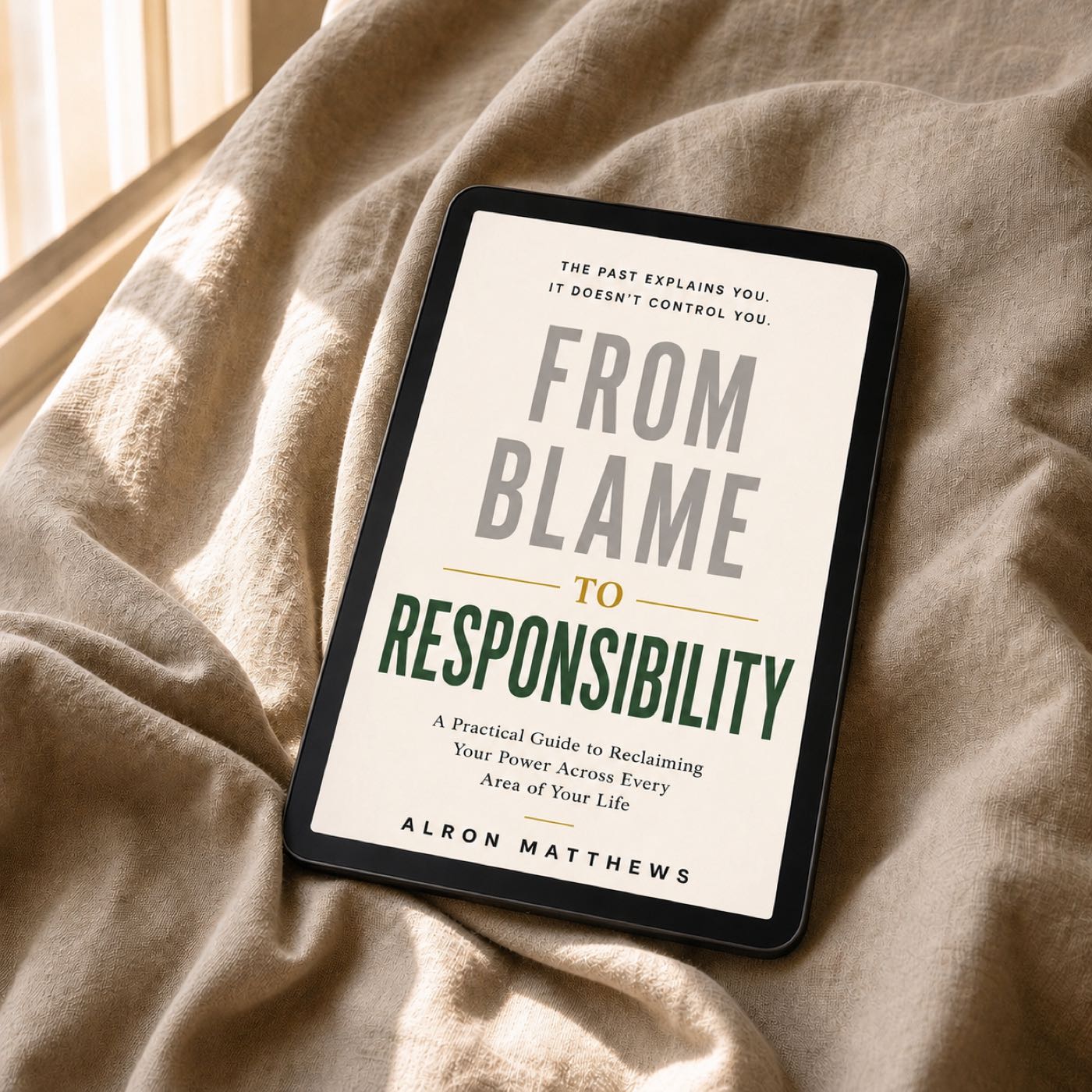
Most people aren't stuck because they lack intelligence, motivation, or opportunity.
They're stuck because they're still waiting.
And while they wait, life quietly moves on.
I know that place. I've lived there. And I know how reasonable it feels to stay because the things that happened were real, the pain was real, and the people who let you down were real.
But here's what I had to learn the hard way: what happened to you is not the same as what keeps you stuck.
What keeps you stuck is the story. And the story, unlike the past, is something you can actually change.
From Blame to Responsibility is a practical self-development book about personal responsibility, emotional freedom, mindset, self-awareness, and creating lasting change. It's not about blaming yourself. It's not about pretending difficult things never happened. It's about discovering the one thing nobody can take away from you: your ability to choose what happens next.
You replay old conversations: what was said, what should have been said, what you wish you'd done differently.
You know what you need to do, but something underneath keeps you from doing it.
You find yourself in the same patterns, same dynamics, same outcomes, even when you've promised yourself things would be different.
You feel like your life is still being shaped by things that happened years ago rather than decisions you're making now.
Part of you is still waiting for someone else to change before you can finally move forward.
If you recognised yourself in any of that, this book was written for you.
Not because you're broken. But because somewhere inside, you already know you're capable of more than this.
Blame feels like protection.
But it keeps us attached to the very things we're trying to leave behind.
This isn't about overnight transformation. It's about a shift in how you see things, how you respond to them, and what you do next.
You will stop
You will begin
This isn't a motivational book. It's not about thinking positively or finding your why. It's about something quieter and more lasting: learning to take ownership of where you go from here, even when where you've been was genuinely hard.
Part One
Blame isn't always loud. Sometimes it looks like exhaustion, disengagement, or quietly believing that nothing will ever change.
Part Two
Something can be entirely not your fault and still become your responsibility. That's not cruel. It's freeing.
Part Three
Why do we keep repeating what doesn't work? This is about understanding what's driving the loop and how to step out of it.
Part Four
It shows up in capable, intelligent, self-aware people as a quiet belief that your hands are tied.
Part Five
Not through force or becoming someone you're not. Through clarity, attention, and deliberate shifts in what you do next.
Part Six
Lasting change comes from what you do next, and the day after that: habits, perspectives, and daily decisions.
You're tired of feeling like you're spinning your wheels.
You're done making excuses, including to yourself.
You want to understand why you do what you do, and how to change it.
You want relationships that are healthier, starting with the one you have with yourself.
You're carrying resentment, regret, or old wounds you haven't been able to put down.
You're a coach, leader, or someone committed to doing the deeper work of self-development.
You're ready to stop waiting for life to change and start being the reason it does.
This book helped me realise that responsibility isn't punishment. It's freedom.
Simple, practical, and deeply thought-provoking. I didn't expect it to land the way it did.
I stopped focusing on what happened to me and started focusing on what I could do next. That shift alone was worth it.
Responsibility is not a burden.
It's the moment you stop being at the mercy of everything that happened.
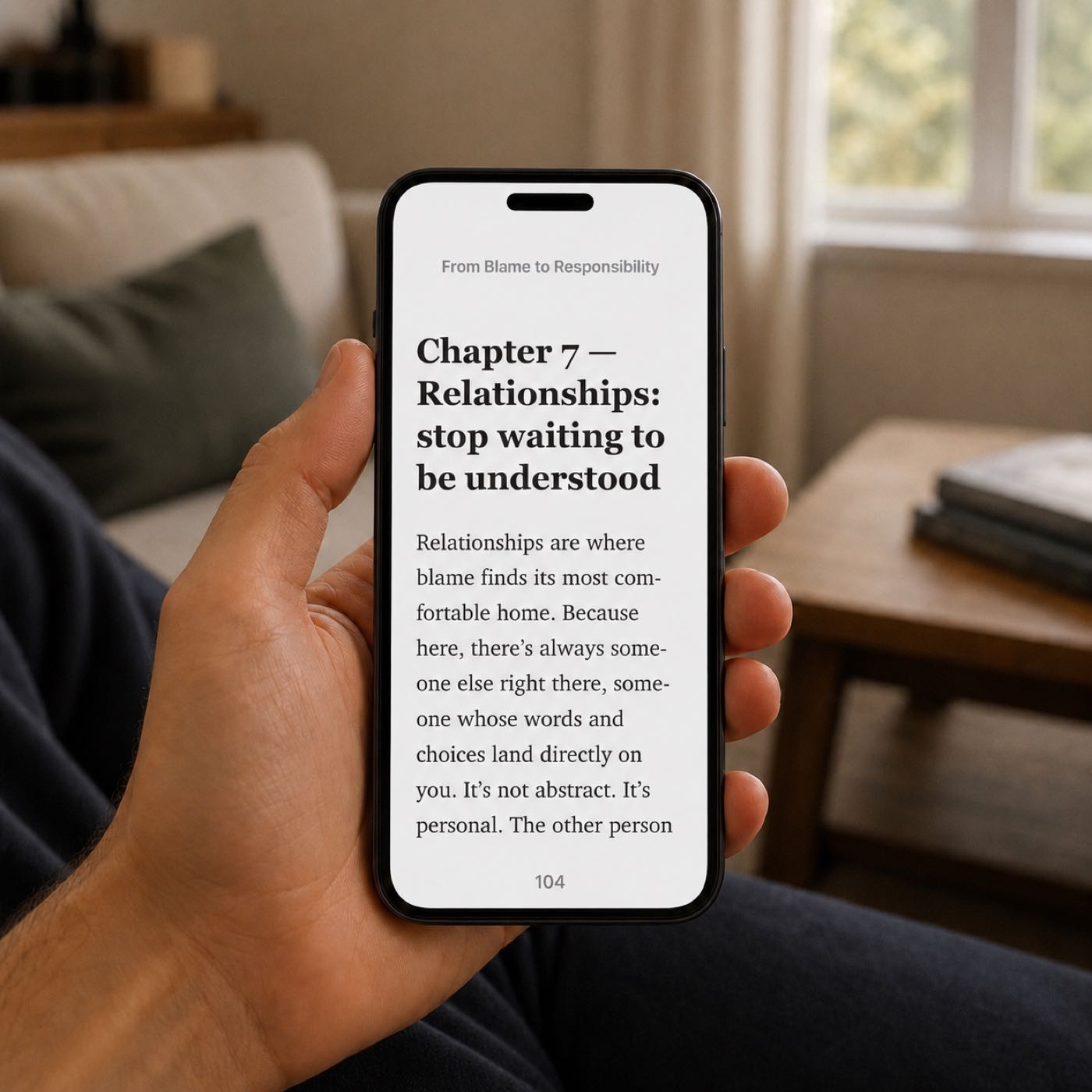
Part One — The Ground Beneath the Work · Chapter One
Everything in this book rests on one distinction, so let's get it exactly right before we go anywhere else. Blame and responsibility look like they're in the same family. They're not. They're opposites that happen to live near each other, and confusing them is what keeps most people stuck for years.
What blame actually is. Blame is the mind's way of explaining pain by locating its source outside yourself. It's not always wrong. Sometimes other people genuinely do cause harm. Sometimes systems are unjust. Sometimes life is unfair in ways that are real and deserve to be named clearly and out loud. Naming the true cause of a thing is not the problem, it's often necessary and healthy. The problem is blame as a way of living, as the default, permanent response to difficulty. As a way of living, blame becomes a cage. It tells you that your wellbeing depends on someone or something else changing first. And when that change doesn't come, and it usually doesn't come on your timeline, if it comes at all, you're stuck. Waiting. Resenting. Your whole life on hold, pending an apology or a fairness that may never arrive.
What responsibility actually is. Responsibility is the decision to be the author of your own response, regardless of what caused the situation. It doesn't minimize what happened. It doesn't say it was your fault. It says: this is where I am, and I get to decide what I do from here. That's it. That's the whole thing. Responsibility is not punishment. It's not self-blame wearing a different name. It's the recognition that you have agency, and that acting on that agency is the only way anything in your life actually changes.
Fault and responsibility are not the same thing. This is the distinction people miss, and it matters enormously, so I'll state it as plainly as I can: fault is about the past; responsibility is about the future. Fault asks who caused it. Responsibility asks who's going to carry it forward. You can be entirely without fault for a situation and still be the only person available to take responsibility for what happens next. A drunk driver hits your car, not your fault, not even slightly. But the recovery, the insurance calls, the physiotherapy, the choice about whether to let it make you bitter, that's yours to carry, because you're the one living your life. Nobody else can do it for you. That's not unfair. That's just the structure of being a person. The most important shifts in life happen the moment someone stops asking "whose fault is this?" and starts asking "given that it happened, what now?"
The blame–responsibility spectrum. It helps to hear the two languages side by side, because once you can hear them, you'll catch yourself.
Why the shift is hard. Here's the honest part. Blame provides relief. It's a short-term emotional release valve, and for a moment, it genuinely feels good. Being right, being the wronged party, having a clear villain, these give the mind something solid to hold onto when everything feels uncertain. Responsibility doesn't offer that hit. It asks you to sit with discomfort, with complexity, with the unsettling truth that your life is, to a real degree, in your own hands. That's a lot to hold. We'll spend the whole next chapter on exactly why blame is so seductive, because you cannot put down a thing until you understand why you were holding it.
But here's what blame costs you in the long run: it keeps you passive. It puts your healing, your growth, your outcomes in someone else's hands. And most of the time, those hands aren't coming.
You cannot always choose what happens to you. You can always choose who you are in response to it.
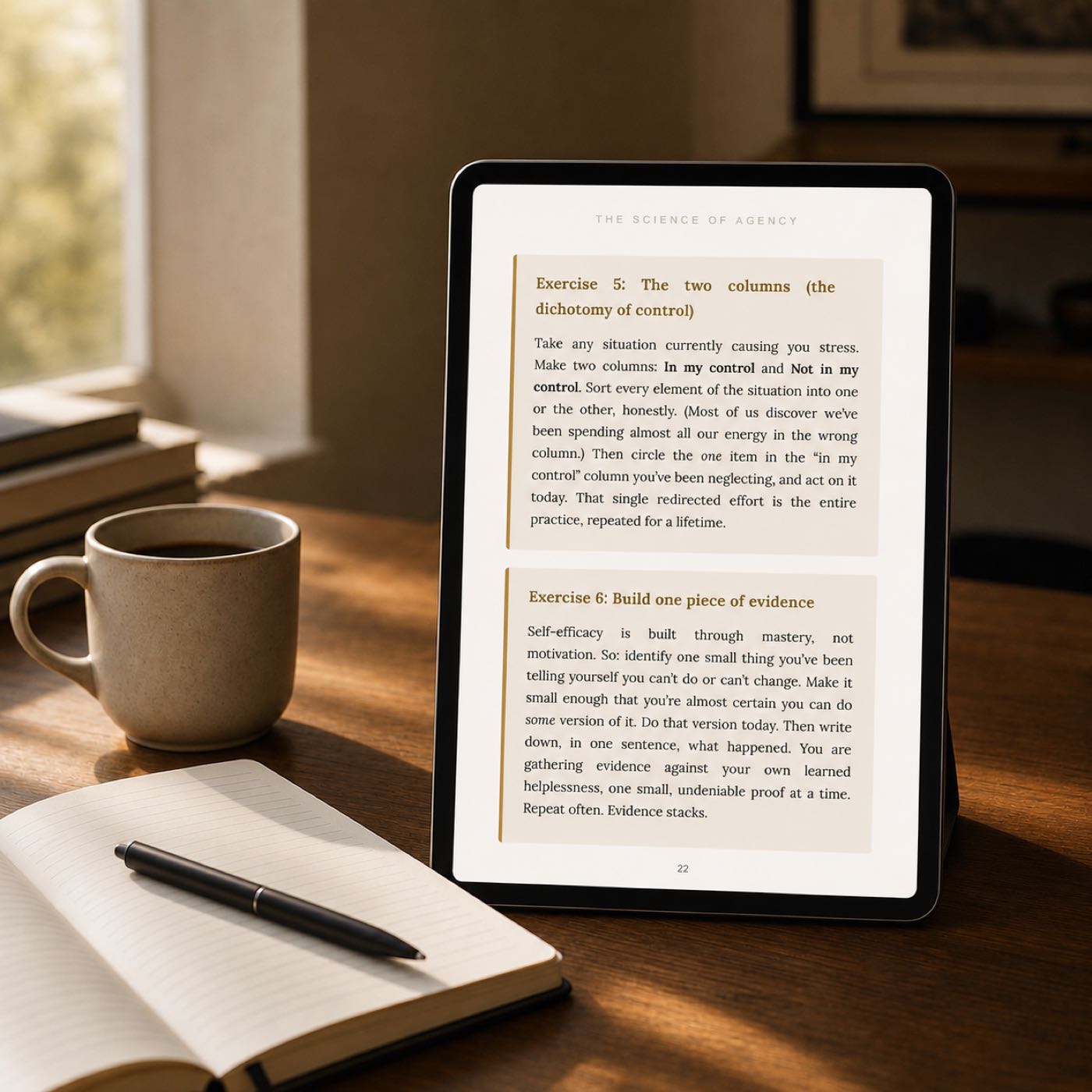
Take fifteen quiet minutes and a journal. Answer honestly, not to feel bad, but to see clearly.
Pick one difficult situation in your life. Draw two columns.
The point of this exercise is to feel, in your body, that both columns can be completely true at once. You were not at fault, and the path forward is still yours. Holding both is the entire skill.
This is Chapter One of thirteen.
Continue Reading — Get Your CopyDigital Edition
A practical guide to personal ownership, emotional freedom, and lasting change.
ONLY $9.99
One-time purchase · Lifetime access
Instant Download
Lifetime Access
PDF Format
Read Anywhere
Payments are handled by trusted providers. Stripe supports secure, PCI-compliant card processing, and PayPal encrypts transactions with eligible purchases covered by Buyer Protection. Learn more from Stripe and PayPal.
Yes. The paperback edition is available through Amazon. A digital PDF edition is also available here for instant download.
PDF format, readable on any device: phone, tablet, or computer.
You'll receive instant access immediately after payment. No waiting, no shipping.
It's a self-development book that includes practical exercises, reflections, and actionable insights throughout, not just theory.
Yes. Use the Read Chapter One link above to get a feel for the writing before you commit.
Your future doesn't begin when someone else finally does the right thing.
It begins the moment you decide you're not waiting anymore.